
Landed vs High-Rise: Which Rents Better in KL and Selangor

Adrian Wong
Registered Negotiator · REN74052
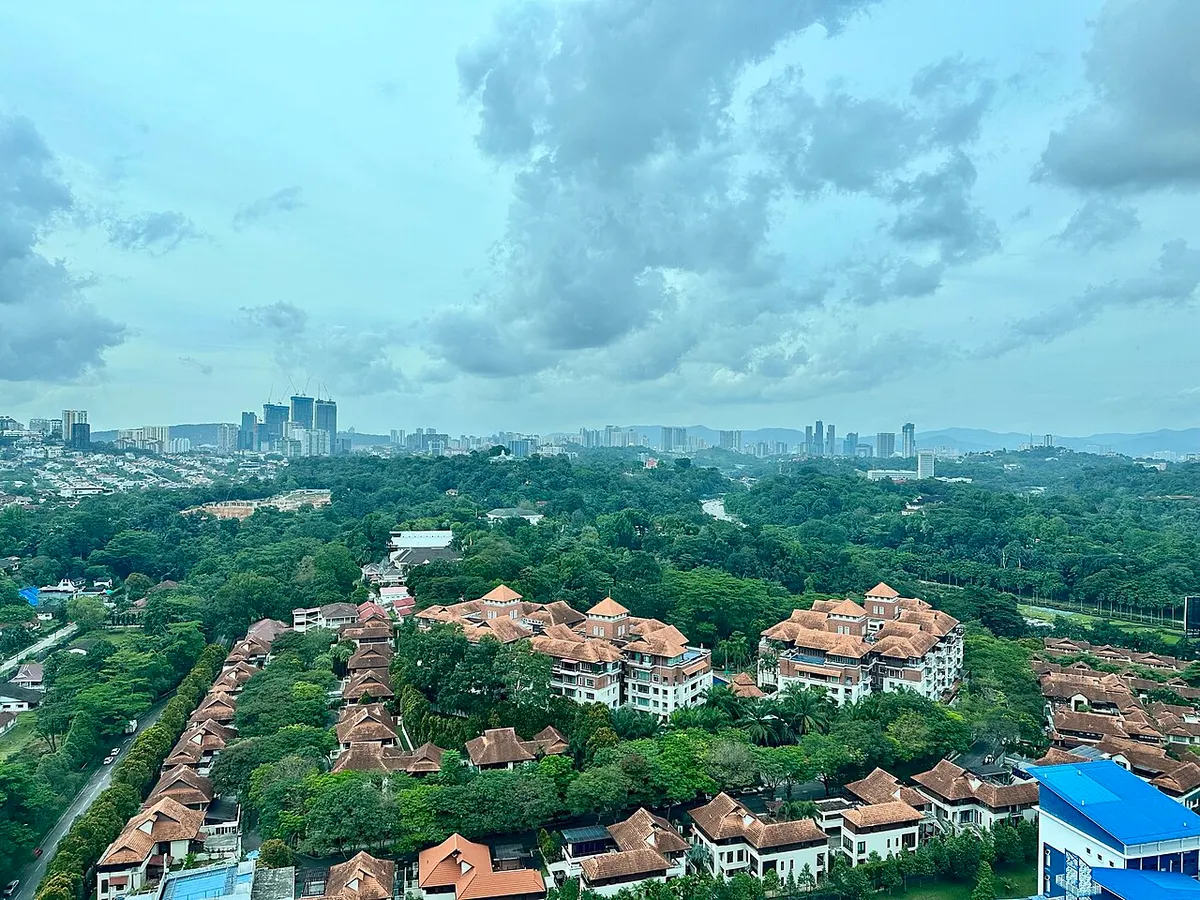
Photo: Slyronit / Wikimedia Commons, CC BY-SA 4.0
Every investor asks the same question at some point: buy a terrace or semi-D and rent it to a family, or buy a condo unit and rent it to a professional or an expat couple. The honest answer is that the two behave like different asset classes right now, not two flavours of the same thing. The data backs that up more clearly than it has in a while.
What the price data actually says
Start with NAPIC's own Malaysian House Price Index. In Q1 2026, terraced house prices rose by 2.2% year on year, semi-detached house prices also rose by 2.2%, high-rise residential prices increased by a slower 1.3%, and detached house prices were the only category to fall, down 0.7%. NAPIC's first-half 2026 figures, as reported by IQI and Hartamas, show new landed launches selling at 22.8% against only 8.2% for high-rise launches. That sales rate gap matters more for an investor than the headline index does, because it tells you how fast a product actually clears, not just how its average price is drifting.
Kuala Lumpur specifically is holding up better than Selangor on this measure. The Malaysian House Price Index shows KL up 2.7% year on year in Q2 2026, and Selangor down 1.1%. If you are choosing between a KL address and a Selangor one purely on price momentum, that is the number to sit with, though a single quarter of preliminary data is not a trend on its own.
The unsold stock problem sits in serviced apartments
This is the part that should actually change how you think about risk. Nationally, residential overhang reached 33,094 units worth RM17.78 billion at end-June 2026, up 23.0% year on year, while serviced apartment overhang rose to 23,375 units. In Kuala Lumpur, a Hartamas summary of NAPIC's first-half 2026 report counts 6,343 completed unsold serviced apartments, against 3,687 completed unsold residential homes of every type. Serviced apartments are classed as commercial, so they sit outside the residential figure, but they compete for the same tenants. If you buy a high-rise unit in a corridor with heavy competing supply, you are not just competing with other landlords for tenants, you are competing with developers still trying to offload finished stock in the same postcode.
Rental yield: where the numbers actually diverge
This is where it gets more nuanced than "landed is safer, high-rise yields more." Kuala Lumpur's average gross apartment yield was 4.86% in Q1 2026, below the national figure, with single unit-size rows ranging from 2.28% for three-bedroom units in KLCC to 7.53% for the largest units around Jalan Kuching. Those are individual rows, not area averages, but a range that wide inside one city shows the building and the unit size matter far more than the city average.
There is no equivalent published yield index for landed houses in KL, and I would treat any specific landed yield percentage you see quoted online with real suspicion unless it is tied to an actual transaction and an actual tenancy. As a general pattern rather than a published figure: a terrace or semi-D in an established pocket like Bangsar or Damansara Heights commands a high absolute monthly rent, but the purchase price is high enough that the gross yield is often below that of a well-chosen high-rise unit. Landed is more often a capital preservation and tenant-stability play than a yield play.
Tenant profile is the real deciding factor
As a general pattern, high-rise and landed don't compete for quite the same tenant. A compact condo near an MRT or LRT line pulls young professionals and students who want low commitment and low maintenance. A landed house pulls families, often expat families who need the extra bedrooms, a yard, and parking for two cars, and who tend to sign longer leases because moving a household with school-age children is disruptive. If your investment thesis depends on fast tenant turnover and flexible pricing, high-rise suits that. If it depends on a tenant who stays two or three years without you touching the unit, landed suits that better, assuming you can afford the entry price and are comfortable with a lower starting yield.
What this means if you're buying through the site's current listings
Every project in our Centre of KL listings right now is strata, not landed. If you want the high-rise, yield-leaning side of this comparison, look at completed or near-completion stock where rental income starts immediately: Residensi 38 Bangsar is leasehold, completed in 2024, from RM663,000 at RM910 psf (our listing data). Sentral Suites @ KL Sentral and TRX Residences are both already completed (TRX Residences in 2024) and sit directly on transit infrastructure, which tends to help tenant demand.
If you are prepared to wait out a construction period for a lower entry price, Enlace Suites @ Pantai Sentral Park starts from RM624,000 with completion estimated for 2029, and Lunar Seputeh starts from RM610,000 with completion estimated for 2031. Longer completion timelines mean more years of holding cost before any rent arrives, so weigh that against the lower entry price rather than treating "cheaper" as automatically better.
None of this tells you to pick one format over the other in the abstract. It tells you to match the format to what you actually want from the investment: faster tenant turnover and a wider yield range with high-rise, or a smaller pool of higher-paying, longer-staying tenants and generally steadier price support with landed. Confirm any figure that matters to your decision against NAPIC's own published tables before you commit, since the numbers above are preliminary for the most recent quarters and subject to revision.